Roll Volley & The Backhand Flick
The premier speed-up tandem at the Kitchen line. Transform dead balls floating below the net tape into blistering attacks dipping directly into opposing feet.
The Roll Volley and Backhand Flick are the twin pillars of Kitchen offense when an opponent's dink floats level with or slightly below the net tape. While the Roll Volley relies on a low-to-high forearm brush that generates heavy topspin, utilizing the Magnus effect to pull the ball down into opponent feet, the Flick leverages an explosive wrist snap disguised out of a soft dink posture to fire a sudden flat bullet into the opponent's chest or paddle-shoulder.
Mastering the Roll Volley in Pickleball
Channel: John Cincola Pickleball
Drop the paddle head below the ball to build upward brushing trajectory.
Brush up with the forearm, creating friction that forces the ball to dip downwards.
Instantly bring the paddle back to chest level to defend against point-blank counters.
Biomechanical Breakdown: Roll Volley & The Backhand Flick
At the Kitchen line, the Forehand Roll Volley and Backhand Roll & Flick represent two distinct kinetic philosophies. Select a tab below to explore paddle angles, contact mechanics, and acceleration paths for each wing:
📐 The 80° Closed Paddle Face Secret
The single biggest mistake recreational players make when rolling the ball on the forehand is holding a vertical 90-degree paddle face. With high upward forearm acceleration, a 90-degree face launches the ball uncontrollably past the baseline. Pro players counter this by closing the paddle face slightly to 80° (10° forward tilt from vertical).
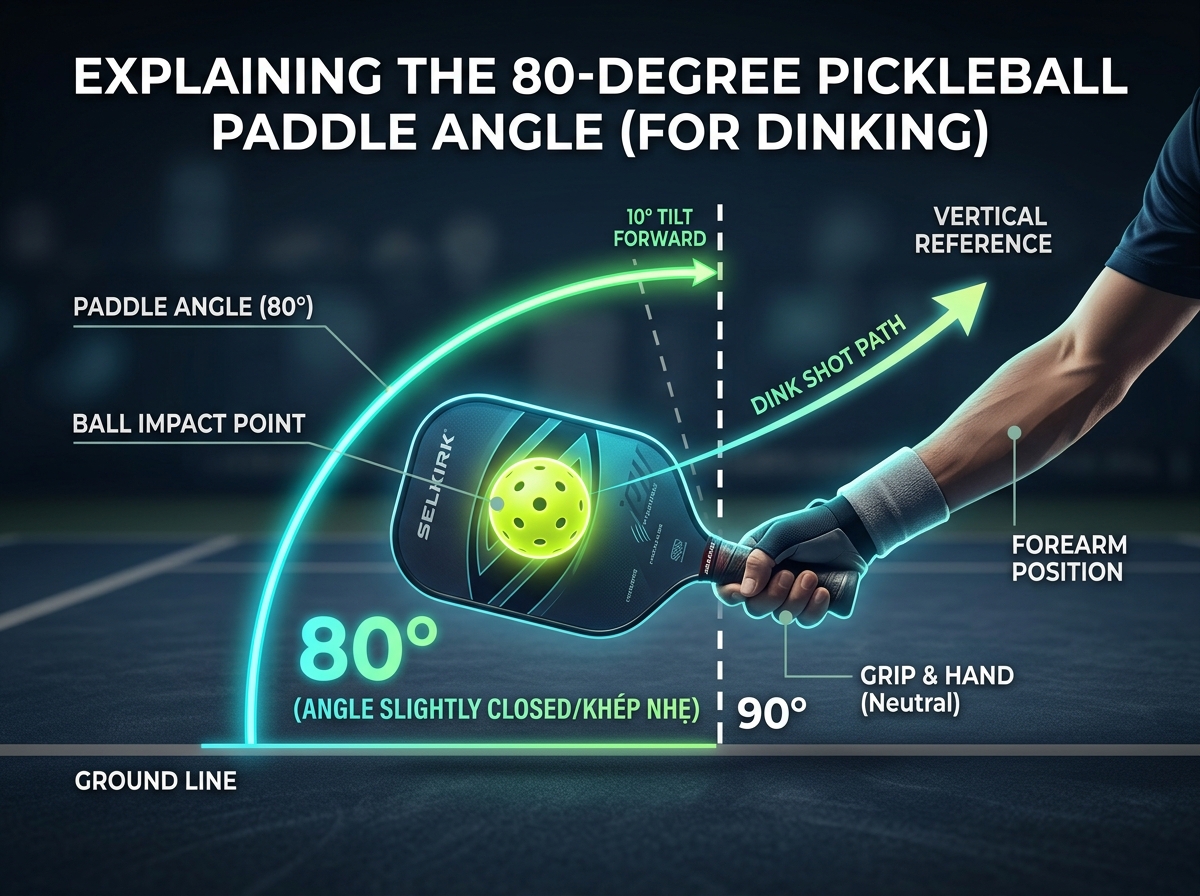
Aerodynamic sweet spot: 80° tilt combined with upward brushing generates heavy topspin dip over the net.
Forearm speed launches ball flat, soaring deep over opponent heads and past the baseline.
Clears net tape by 2-4 inches and immediately plunges sharply into opponent shoe-tops via Magnus effect.
Paddle points excessively downward, driving the ball directly into the net tape.
🎯 Contact Out Front & 6 to 12 O'Clock Tangential Brush
The forehand roll volley is neither a smash nor a flat push! You must drop the paddle head below the ball (Paddle Drop), make contact 8 to 12 inches out in front of your chest, and brush tangential friction across the ball from 6 o'clock upward to 12 o'clock.
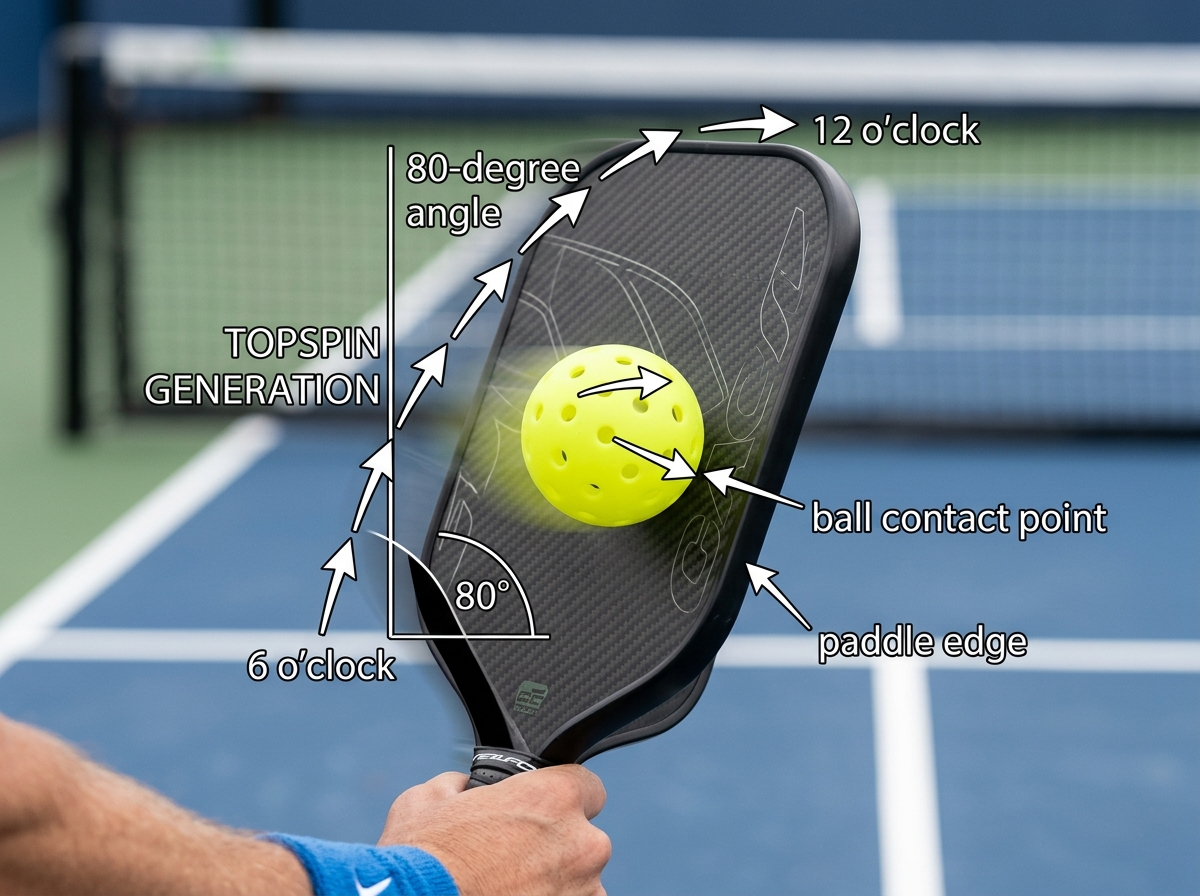
Biomechanical friction: Paddle head drops low ➔ Brushes 6h to 12h creating dipping topspin.
Primary Kinetic Engine: Synchronized forearm and shoulder rotation. Maintain a firm, locked wrist to prevent wrist-flick trajectory variance.
Tactical Target: Crosscourt angle or dipping deeply into the opponent's outside foot, forcing an upward, off-balance defensive dig.
| Distinction Metric | Forehand Roll Volley | Forehand Punch Volley |
|---|---|---|
| Ball Height | Floating level with or below net tape | Chest-high or above net tape |
| Kinetic Execution | Upward forearm brush (6 to 12 o'clock) | Compact linear punch with zero backswing |
| Trajectory & Spin | Arced flight with violent topspin dip | Flat, laser bullet with penetrating speed |
| Tactical Intent | Force a hurried upward pop-up from feet | Eliminate reaction time to end rally |
4-Step Practical Execution Guide (Roll & Flick)
Step 1: Dead Ball Detection
TimingOnly speed up when an opponent's dink floats level with net tape or sits slightly high (dead dink). Speeding up balls sinking deep below net tape leads to net errors 90% of the time.
Step 2: Disguise Setup
PsychologyStay low and present your paddle face identically to a patient dink. This deceptive setup lulls opponents into dropping their paddle and relaxing their defensive stance.
Step 3: Acceleration at Contact
Execution
If opponent drops paddle: Snap wrist (Flick) straight into their chest or paddle shoulder.
If opponent is disciplined: Brush forearm upward (Roll Volley) to dip topspin into their feet.
Step 4: Immediate High-Paddle Ready
Next BallNever admire your speed-up! Immediately elevate your paddle to chest level with elbows flexed at 90 degrees, fully prepped for a rapid 0.3-second counter-firefight.
"3 Dinks ➔ Surprise Flick Attack" Drill (10 Minutes)
Drill Structure: You and a partner engage in patient cross-court dinking at the Kitchen line.
Trigger Rule: Count aloud: Dink 1, Dink 2, Dink 3. On ball 4, the designated attacker disguises their setup and abruptly unleashes a Backhand Flick or Roll Volley into the partner's paddle shoulder.
Training Objective: Develops deception and explosive acceleration for the attacker, while sharpening instant block-volley reflexes for the defender.
3 Mistake Corrections, DUPR Drills & FAQ
⚠️ 3 Critical Roll Volley Mistakes & How to Fix Them ▼
An overly large wind-up loses control and sails the ball long. Fix: Restrict power to forearm flexion and upward paddle brushing from 6 o'clock to 12 o'clock.
Dumps the ball into the net or sprays it erratically. Fix: Always strike the ball 10-12 inches out in front of your chest.
Keeping your eye level too high above the net misjudges ball height. Fix: Bend your knees to lower your center of gravity level with the net.
⚔️ DUPR Rating Improvement Drills (Roll Volley) ▼
Stand at the Kitchen line while a partner feeds soft balls below net tape. Brush 20 consecutive roll volleys dipping downward into their feet.
Receive cross-court dinks but roll them down the line to hone deceptive directional-change execution under pressure.
❓ Frequently Asked Questions (People Also Ask) ▼
What is the 80-degree paddle angle in the Forehand Roll Volley and why is it essential?
The 80-degree paddle angle refers to tilting the paddle face slightly closed by approximately 10 degrees from the vertical 90-degree plane. When brushing upward with high acceleration to generate topspin, a vertical 90-degree face tends to launch the ball long beyond the baseline, while an overly closed face (<70 degrees) nets the ball. The 80-degree angle is the aerodynamic sweet spot, ensuring the ball clears the net tape by inches before dipping steeply into opponent feet via the Magnus effect.
How does the Forehand Roll Volley differ from the Forehand Punch Volley?
The Forehand Roll Volley is initiated when the ball is level with or below the net tape, utilizing an upward brushing forearm motion (6 to 12 o'clock) to create topspin dip for safe offensive pressure. In contrast, the Forehand Punch Volley is executed on balls chest-high or above the net, employing a compact, linear punch with zero follow-through to pierce opponent defenses with flat speed.
Why do pro players like Ben Johns favor the Backhand Roll over the Forehand Roll at the Kitchen?
In pro pickleball, the Backhand Roll accounts for over 70% of kitchen speed-ups because the biomechanics of the flexed elbow and forearm allow players to protect the entire body and middle court without jamming the dominant hip. The fixed elbow acts as a door hinge, delivering superior rotational consistency and disguise compared to the forehand.
How does the Backhand Flick differ from the Roll Volley?
The Roll Volley uses forearm and shoulder movement to create an upward brushing arc, generating heavy topspin that pulls the ball down into opponent feet with high margin of error. The Flick (especially Backhand Flick) uses explosive wrist snap with minimal backswing, firing a flat, lightning-fast bullet directly at the opponent's chest or paddle-shoulder.
When should you deploy the Roll Volley versus the Flick?
Deploy the Roll Volley when the ball is level with or slightly below the net tape and opponents are balanced, needing topspin to keep the shot safely dipping into feet. Deploy the Flick during patient dinking rallies when opponents become complacent and lower their paddles, allowing you to disguise the shot as a dink before snapping into their paddle shoulder.